🐕 Are Labrador Retrievers Hypoallergenic? No, here's why❌ Quick Answer: No, Labrador Retrievers are NOT hypoallergenic! Labrador Retrievers are considered one of the least hypoallergenic breeds due to their dense double coat that sheds heavily year-round, especially during seasonal changes. They produce significant amounts of dander, saliva, and urine proteins (Can f 1 allergen) that trigger allergic reactions in sensitive individuals. Despite their wonderful temperament and popularity, Labs are not recommended for people with dog allergies. 🤧

The beautiful Labrador Retriever is beloved worldwide, but their shedding coat makes them unsuitable for allergy sufferers 📊 Labrador Retriever Quick FactsHypoallergenic Status: ❌ Not Hypoallergenic
Shedding Level: ⭐⭐⭐⭐⭐ Very High
Coat Type: Dense Double Coat
Dander Production: High
Weight: 25-36 kg (55-80 lbs)
Height: 55-62 cm (21.5-24.5 in)
Lifespan: 10-12 years
Temperament: Friendly, Outgoing
🔬 What Makes a Dog Breed Hypoallergenic?
That adorable face comes with significant allergen production from saliva and dander Before understanding why Labrador Retrievers aren't hypoallergenic, it's essential to know what makes a breed hypoallergenic in the first place. The term "hypoallergenic" doesn't mean completely allergen-free – rather, it describes dogs that produce fewer allergens than typical breeds. 🧬 The primary allergen responsible for most dog allergies is a protein called Can f 1, found in dog dander, saliva, and urine. Truly hypoallergenic breeds share several characteristics: ✅ Minimal shedding – Less hair means less dander distributed throughout your home ✅ Single coat structure – Without an undercoat, these dogs produce less dander ✅ Hair instead of fur – Similar to human hair, it grows continuously and sheds minimally ✅ Lower dander production – Some breeds naturally produce fewer allergenic proteins Examples of genuinely hypoallergenic breeds include Poodles, Portuguese Water Dogs, and Bichon Frises – all characterized by their non-shedding, curly coats that trap dander rather than releasing it into the environment. 🐩 ↑ Back to Menu❌ Why Labrador Retrievers Are NOT Hypoallergenic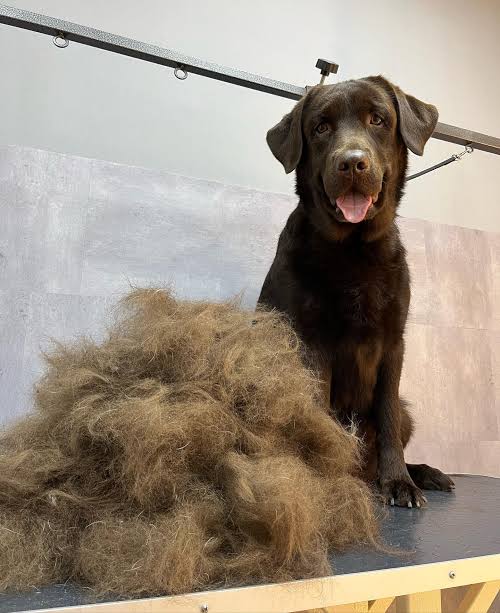
The amount of fur a Labrador sheds after grooming is impressive – and problematic for allergy sufferers Labrador Retrievers possess several characteristics that make them particularly challenging for people with allergies. Understanding these factors can help you make an informed decision about whether a Lab is right for your household. 🏠 1. Dense Double Coat Structure 🧥Labradors have a dense double coat consisting of:
This double-layered structure means Labs produce approximately twice the amount of dander compared to single-coated breeds. The undercoat is particularly problematic as it traps dead skin cells and allergens, releasing them in large quantities when the dog sheds. 📈 2. Extreme Shedding Year-Round 💨Labrador Retrievers are notorious for their shedding. They shed moderately throughout the year and experience two major shedding seasons (spring and fall) when they "blow their coat." During these periods, the amount of loose fur can be overwhelming, coating furniture, clothing, and every surface in your home. ⚠️ Allergy Alert: During peak shedding seasons, a single Labrador can shed enough fur to fill a grocery bag every week! This constant distribution of fur carries dander and allergens throughout your living space, making it nearly impossible to create an allergen-free environment. 3. High Dander Production 🔬Dander consists of microscopic flakes of dead skin that all dogs produce. Labradors produce significant amounts of dander due to their large size and active skin cell turnover. These tiny particles become airborne easily and can remain suspended in the air for hours, triggering allergic reactions even when the dog isn't nearby. 😷 4. Saliva and Protein Distribution 💧Labradors are famously affectionate and enthusiastic – they love to lick, play, and interact closely with their families. While this makes them wonderful companions, it also means they spread Can f 1 proteins from their saliva onto furniture, clothing, and skin through constant contact. Their tendency to drool, especially when excited about food or play, further distributes allergens. 🐾 
Active play means more panting, drooling, and allergen distribution – but look at that joy! 5. Size Matters 📏As a medium-to-large breed (55-80 pounds), Labradors simply have more surface area producing dander compared to smaller dogs. More dog equals more allergens – it's a simple equation that makes Labs particularly problematic for allergy sufferers. The larger the dog, the greater the allergen load in your home environment. ↑ Back to Menu🤧 Can People with Allergies Live with Labrador Retrievers?
Those puppy eyes are irresistible, but allergy sufferers should proceed with extreme caution The honest answer is: it depends on the severity of your allergies. While Labradors aren't recommended for people with dog allergies, some individuals with mild sensitivities have successfully managed life with a Lab through diligent management strategies. However, this requires significant commitment and may not work for everyone. 💭 ❗ Important ConsiderationIf you have moderate to severe dog allergies, respiratory issues like asthma, or if allergic reactions significantly impact your quality of life, a Labrador Retriever is NOT the right choice for you. No amount of cleaning or grooming will reduce allergen levels sufficiently to prevent reactions in highly sensitive individuals. For Those with Mild Allergies 🌟If you have mild allergies but are determined to live with a Labrador, the following strategies might help minimize your symptoms: 🏠 Environmental Management:
✂️ Grooming Protocol:

Adventures together are wonderful, but the car will need regular deep cleaning to manage allergens 💊 Medical Management:
🚨 Critical Warning: Even with all these measures, there's no guarantee your allergies will be manageable. Allergies can worsen over time with continued exposure. Before committing to a Labrador, spend extended time (several visits over weeks) with adult Labs to gauge your reaction. Puppy fur differs from adult coat, so don't make decisions based solely on interaction with puppies. 🔄 Hypoallergenic Alternatives to Labrador RetrieversIf you love the Labrador's temperament but need a hypoallergenic option, several breeds offer similar characteristics without the allergy concerns. These alternatives maintain the Lab's friendly nature, trainability, and family-oriented personality. 🐕🦺
🐩 Why Poodle Mixes?You'll notice several Poodle crosses (Doodles) in this list. When properly bred with F1B generation (75% Poodle genetics), these dogs often inherit the Poodle's hypoallergenic coat while maintaining the desired temperament traits of the other breed. However, not all Doodles are hypoallergenic ! F1 generation (50/50 mix) can shed considerably. Always meet the parents and spend time with adult dogs before committing. 🔍 Looking for the Perfect Hypoallergenic Match?While Labrador Retrievers aren't suitable for allergy sufferers, there's a hypoallergenic breed perfect for your lifestyle! Whether you want an active companion, a gentle family dog, or a trainable working partner, hypoallergenic options exist that won't trigger your allergies. 🌟 Take our quick quiz to find hypoallergenic breeds that match your preferences and lifestyle! 💡 Tips for Labrador Owners with Allergies
Proper nutrition supports healthy skin and coat, potentially reducing excessive dander If you already own a Labrador or are committed to adopting one despite allergies, implementing a comprehensive management plan is essential. These strategies won't make your Lab hypoallergenic, but they can help reduce allergen levels in your home. 🏡 Daily Routine 📅Morning:
Throughout the Day:
Weekly Tasks:

Fall brings beautiful colors and heavy shedding – be prepared for extra grooming during seasonal coat changes Dietary Support for Healthy Skin 🥘A healthy coat starts from within. Proper nutrition can reduce excessive shedding and dander production:
Strategic Home Design 🏠

Winter adventures are magical, but remember to wipe down your Lab before coming indoors to minimize tracked allergens ⚠️ Reality Check: Even with meticulous implementation of all these strategies, you cannot eliminate allergens from your home entirely. If your allergies worsen or significantly impact your quality of life, you may need to consider rehoming your Lab to a non-allergic family. This heartbreaking decision is sometimes necessary for your health. Always have a backup plan before adopting. 🧪 Allergy Testing Before Adopting a Labrador
Before falling completely in love, ensure you can actually live with a Lab's allergen production Before committing to a Labrador Retriever, especially if you have any history of allergies, thorough testing is absolutely essential. Many people fall in love with a puppy only to discover months later that their allergies make cohabitation impossible. This results in heartbreak for both the family and the dog. 💔 Step 1: Medical Allergy Testing 🏥Schedule an appointment with an allergist for specific IgE testing for dog allergens, particularly the Can f 1 protein. This blood test will reveal:
Step 2: Real-World Exposure Testing 🏠Lab tests are valuable, but real-world exposure is the ultimate test. Before adopting:
Step 3: Trial Period Consideration 🗓️Some breeders and rescues offer trial adoption periods or "foster-to-adopt" arrangements. This allows you to live with a Lab for 2-4 weeks before making a final commitment. During this period:
Remember: It's far better to return a dog during a trial period than to rehome them after months or years when you've all bonded deeply. 💙 Questions to Ask Yourself 🤔
❓ Frequently Asked QuestionsNo, coat color makes no difference in allergen production. Whether your Lab is yellow, black, or chocolate, they all have the same dense double coat structure and produce equal amounts of dander and allergenic proteins. The Can f 1 allergen is present in all Labs regardless of color. Some people mistakenly believe that lighter-colored dogs are less allergenic because shed hair is less visible on clothing and furniture, but the allergen load is identical. 🎨 Actually, puppy reactions can be misleading. Labrador puppies have softer, fluffier coats that shed less than adult coats. Many people test their allergies with puppies and feel fine, only to develop severe reactions 6-12 months later when the adult double coat develops and shedding intensifies. If you're testing your allergies before adoption, always spend time with adult Labs to get an accurate assessment. Additionally, puppies produce allergens too – they're just typically smaller and produce less dander due to size. Don't let a positive puppy experience convince you that you'll be fine with an adult Lab! 🐶 No, and you shouldn't shave a Labrador! First, shaving doesn't reduce allergen production – dander comes from skin, not just hair. Second, a Lab's double coat serves critical functions: temperature regulation, sun protection, and water resistance. Shaving disrupts these functions and can cause coat damage, making hair grow back incorrectly or not at all. The double coat actually helps Labs stay cool in summer by insulating them against heat. If you're considering shaving your Lab to reduce allergens, this is a clear sign that the breed isn't suitable for your allergy situation. ✂️❌ Labradoodles (Lab + Poodle) can be hypoallergenic, but it's not guaranteed. The key is generation: F1 Labradoodles (50% Lab, 50% Poodle) often inherit the Lab's shedding coat and are NOT reliably hypoallergenic. F1B Labradoodles (75% Poodle, 25% Lab) or multi-generation Labradoodles bred specifically for hypoallergenic coats have much better success rates. However, coat type varies even within litters – some puppies get shedding coats, others get non-shedding coats. You must work with a reputable breeder who conducts genetic testing and can guarantee coat type. Never assume a "Doodle" is automatically hypoallergenic! Always meet the parents and spend extensive time with adult dogs before committing. 🐩🔬 For allergy management, bathing weekly can help reduce allergen levels temporarily by washing away dander and saliva proteins from the coat. Use a hypoallergenic, allergen-reducing shampoo specifically designed for this purpose. However, bathing too frequently (more than once weekly) can dry out your Lab's skin, leading to increased dander production – the opposite of what you want! Between baths, use allergen-reducing wipes daily to remove surface dander and dried saliva. Remember that bathing provides only temporary relief; within 2-3 days, allergen levels return to normal as new dander and saliva accumulate. Bathing alone won't make your home safe for someone with moderate to severe allergies. 🛁 Possibly, but it's a long-term commitment with no guarantees. Allergy immunotherapy involves receiving regular injections of dog allergen over 3-5 years to build tolerance. Success rates vary significantly: some people achieve near-complete symptom relief, while others see minimal improvement. The process is expensive, time-consuming (weekly shots initially, then monthly), and takes 6-12 months before you notice benefits. Most allergists recommend starting immunotherapy before getting a dog, not as a solution after you're already struggling. Additionally, immunotherapy works better for mild to moderate allergies than severe ones. If you're considering this path, work closely with your allergist and be prepared for the possibility that it may not work sufficiently to make living with a heavy-shedding breed like a Lab comfortable. 💉 It's complicated. Some children do outgrow certain allergies, but dog allergies are among the most persistent, with many people retaining them into adulthood. Additionally, allergies can worsen with continued exposure rather than improve. The "hygiene hypothesis" suggests that early childhood exposure to pets might prevent allergies from developing, but this doesn't work for children who already have established dog allergies. If your child has diagnosed dog allergies, getting a Labrador in hopes they'll "outgrow it" is risky and could result in either health complications for your child or rehoming the dog later – traumatic for everyone involved. If you're determined to try, work with a pediatric allergist, start immunotherapy before getting the dog, and have a realistic backup plan if symptoms don't improve. 👶 No, there's no difference in allergen production between English and American Labrador Retrievers. While these lines have some physical differences (English Labs tend to be stockier and calmer; American Labs are leaner and more energetic), both have the same dense double coat structure and produce equivalent amounts of dander and allergenic proteins. The distinction between English and American Labs is about body type and temperament breeding, not coat characteristics. Neither type is more suitable for allergy sufferers than the other. This is a common misconception, likely stemming from confusion with genuinely hypoallergenic breeds that have different coat types. 🌍 🎯 Final Thoughts: Making the Right DecisionLabrador Retrievers are undeniably one of the world's most beloved dog breeds, and for good reason. Their friendly temperament, intelligence, trainability, and devotion to their families make them exceptional companions. They excel as family pets, service dogs, therapy animals, and working dogs. Their gentle nature with children and enthusiasm for life bring immeasurable joy to millions of households. 🌟 However, being wonderful dogs doesn't make them suitable for everyone. If you suffer from dog allergies, a Labrador Retriever presents considerable challenges and is among the more difficult breeds for allergy sufferers to live with comfortably. Their heavy shedding, dense double coat, and high dander production create an environment with substantial allergen levels. While the breed has countless positive qualities, these biological realities are important factors to consider for your long-term health and comfort. 💔 💙 The Most Loving DecisionIf you have dog allergies but desperately want a Lab, the most loving decision – for both yourself and the dog – is to choose a hypoallergenic alternative that offers similar traits. Dogs like Standard Poodles, Portuguese Water Dogs, or properly-bred Labradoodles can provide the companionship, trainability, and joy you're seeking without the health consequences. Your future dog deserves a home where they won't trigger health issues, and you deserve a companion you can fully enjoy without constant discomfort or medication. 🏠 If you already own a Lab and are struggling with allergies, implement every management strategy possible while monitoring your health closely. But also be honest with yourself: if your quality of life is significantly compromised, rehoming your Lab to a loving, non-allergic family may be the kindest choice for everyone involved, as heartbreaking as that is. 😢 Whatever you decide, make it an informed decision based on thorough testing, realistic expectations, and honest assessment of your situation. Dogs are decade-plus commitments; don't let emotion override practical considerations that affect daily life and health. The perfect dog for you exists – it just might not be a Labrador Retriever. 🐕❤️ | |||||||||||||||||||||||||||||||
|
| |||||||||||||||||||||||||||||||
| Переглядів: 443 | | | |||||||||||||||||||||||||||||||

| Total comments: 0 | |